
KHAADAD KHAU — From Better Billing to Better Business Operations
Good software is not built by simply adding more features.
It is built by understanding what happens when a counter gets busy, when a customer is waiting, when the internet goes down, or when an owner needs to know what happened during the day.
That is the thinking behind our continued work on KHAADAD KHAU.
Over this development cycle, we focused on making the platform faster, more reliable, and more practical for snack centres, canteens, takeaway counters, and restaurants.
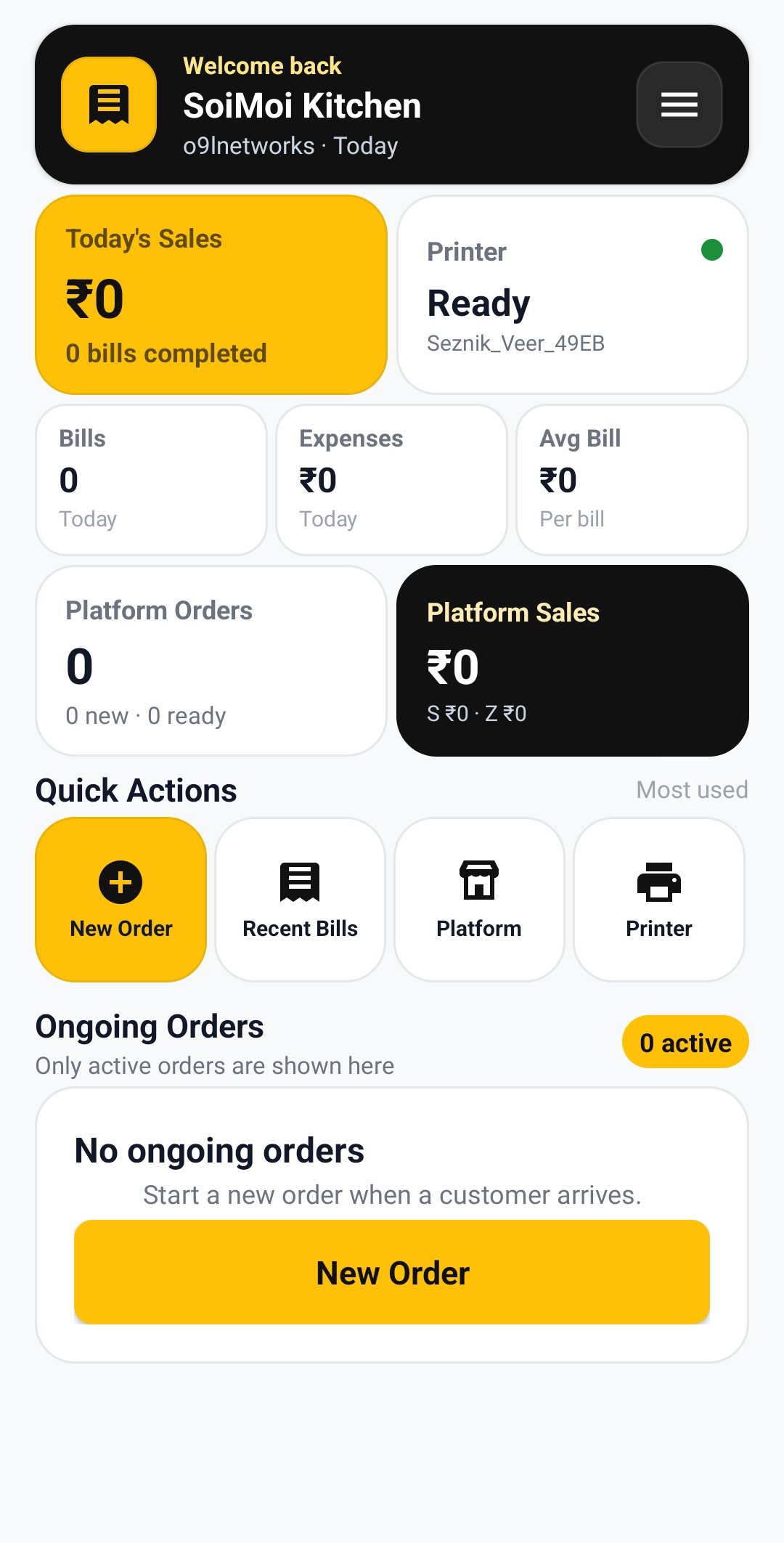
From billing and payments to printing, offline operations, inventory, notifications, and kitchen workflows, KHAADAD KHAU is gradually growing beyond a billing application.
A Simpler Way to Bill
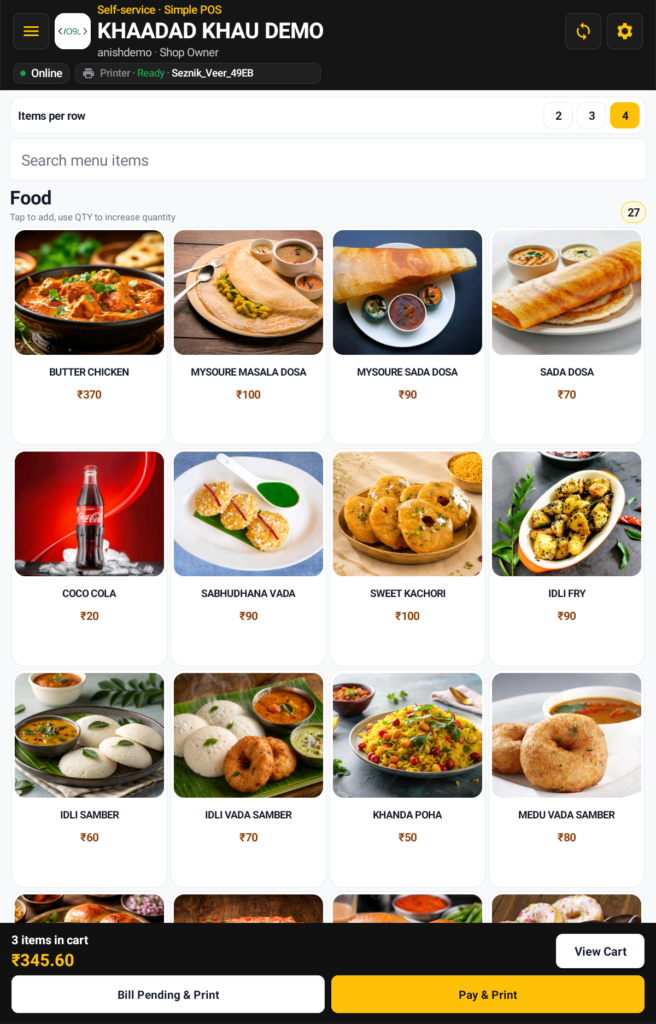
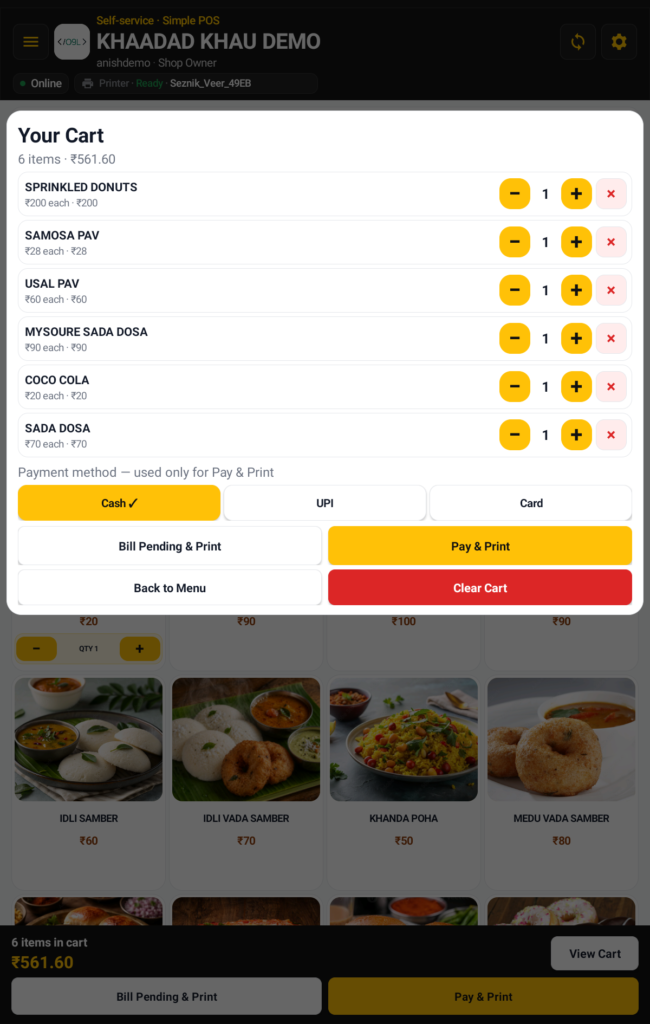
One of the biggest additions is Self-Service Simple POS, designed for quick-service and coupon-based businesses. The new experience makes it easier to browse a photo-based menu, select items, manage quantities, and complete bills quickly.
It includes:
- One-tap item selection
- Direct quantity entry
- Initials-based item search
- Quick actions such as Bill Pending & Print and Pay & Print
- Separate Coupon and Order Numbers
- Flexible mobile and tablet layouts
The existing Standard POS continues to support table-based restaurant billing.
Stronger Offline Billing
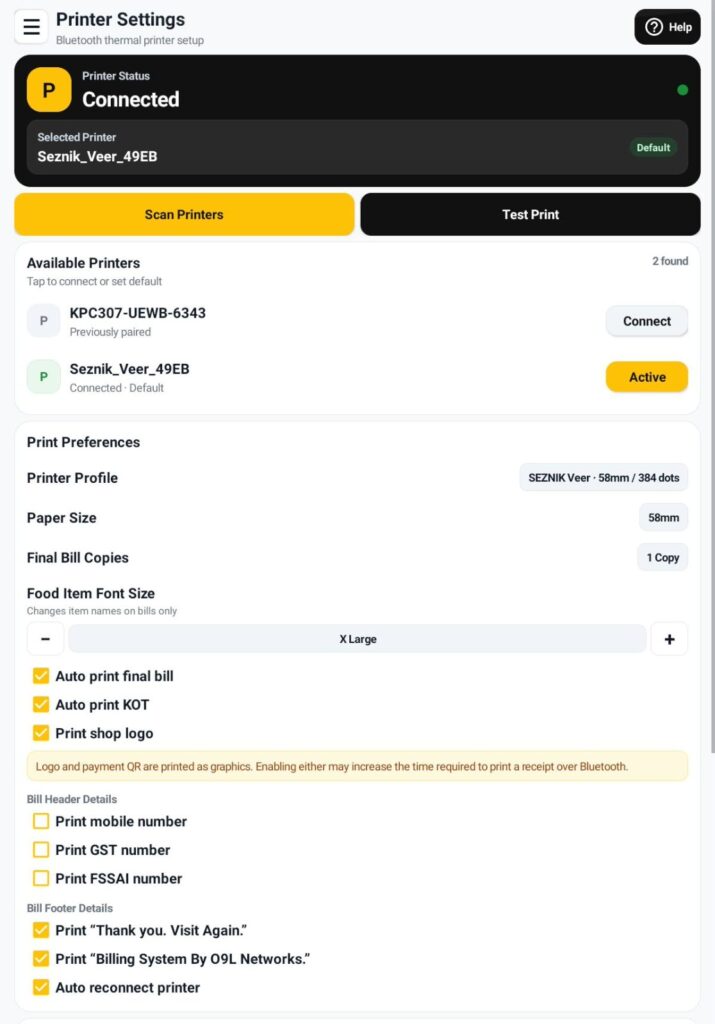
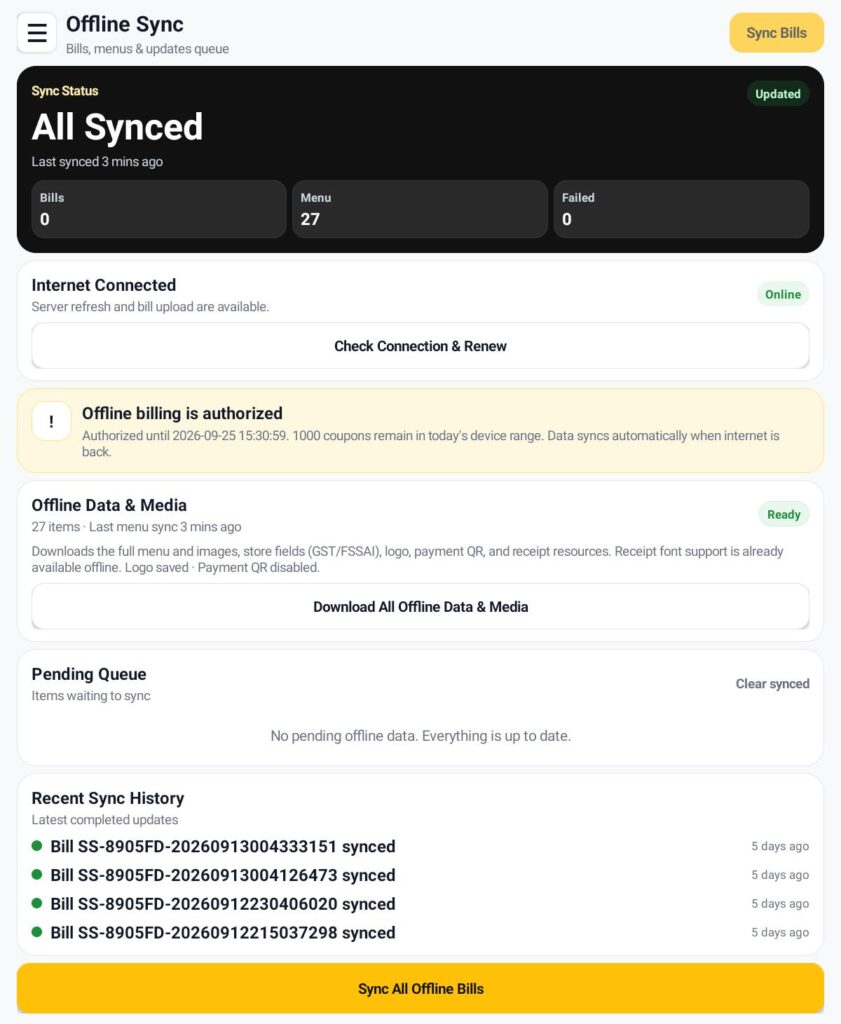
Stronger Offline Billing
A food business should not have to stop billing because the internet has gone down.
KHAADAD KHAU now provides stronger offline support, allowing businesses to:
- Download required data and media
- Create bills while offline
- Synchronize bills when connectivity returns
- Preserve taxes, discounts, payment status, and timestamps
- Use duplicate-safe transaction identifiers
Offline billing continues to depend on valid authorization and previously downloaded resources.
Looking Beyond Billing
KHAADAD KHAU is also moving into inventory and expense management.
The workflow is built around a simple idea:
Stock Added → Sold / Used → Remaining Stock
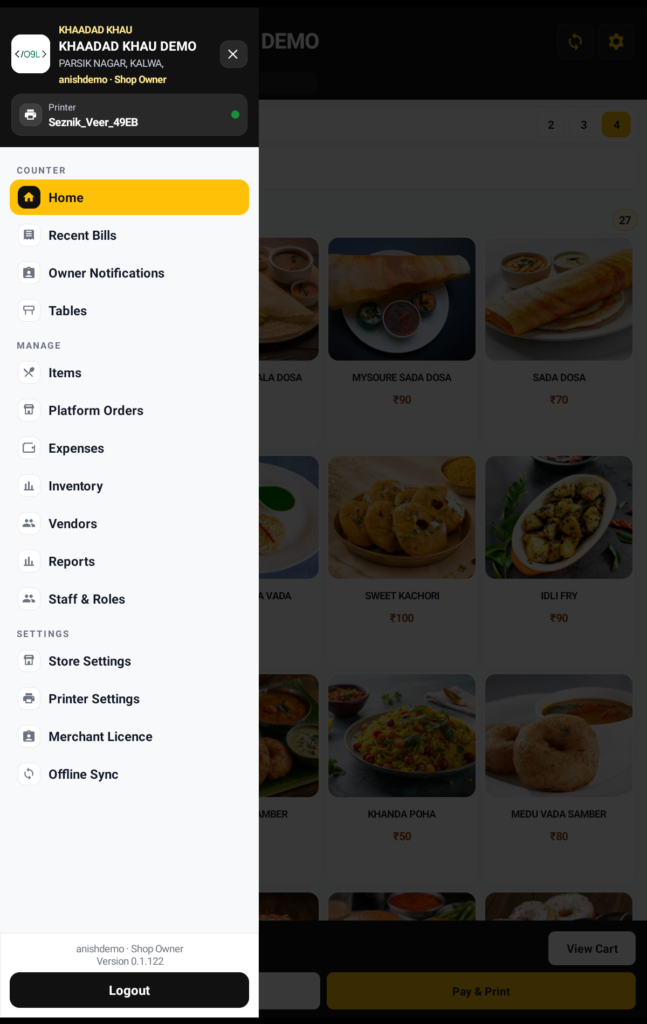
Businesses can record purchased stock, quantities, dates, and costs, while inventory activity can be connected with billing. Purchases can also be linked with expenses, including during offline operations. Daily reports provide a clearer view of collections and item-wise quantities sold.
More Than a Billing Application
The biggest change in KHAADAD KHAU isn’t a single feature.
It is the direction the product is taking.
What started around billing is gradually becoming a broader platform for managing the everyday operations of small food businesses.
A faster way to take an order.
A simpler way to collect payment.
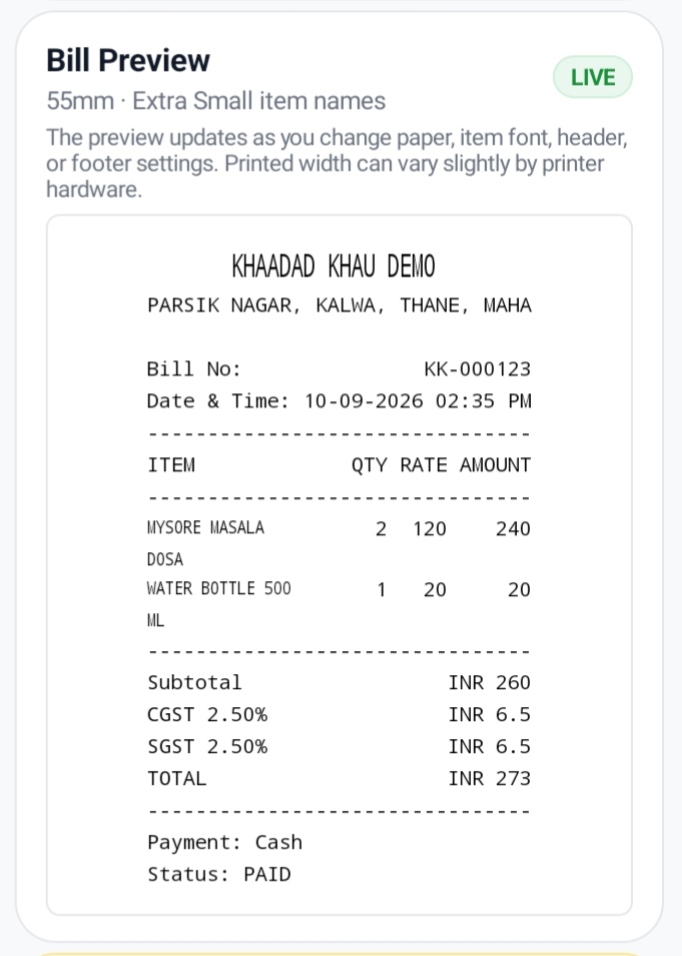
A receipt that prints the way it should.
A bill that can still be created when the internet disappears.
A clearer view of stock and expenses.
A better connection between the counter and the kitchen.
Each improvement comes back to the same idea.
Built for Real Businesses
Alongside new features, we continued improving the everyday experience across phones and tablets.
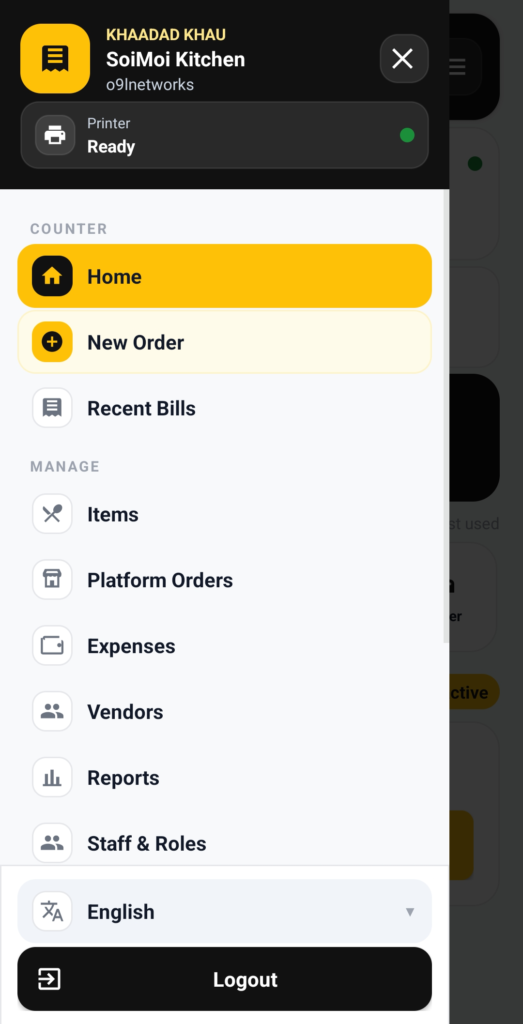
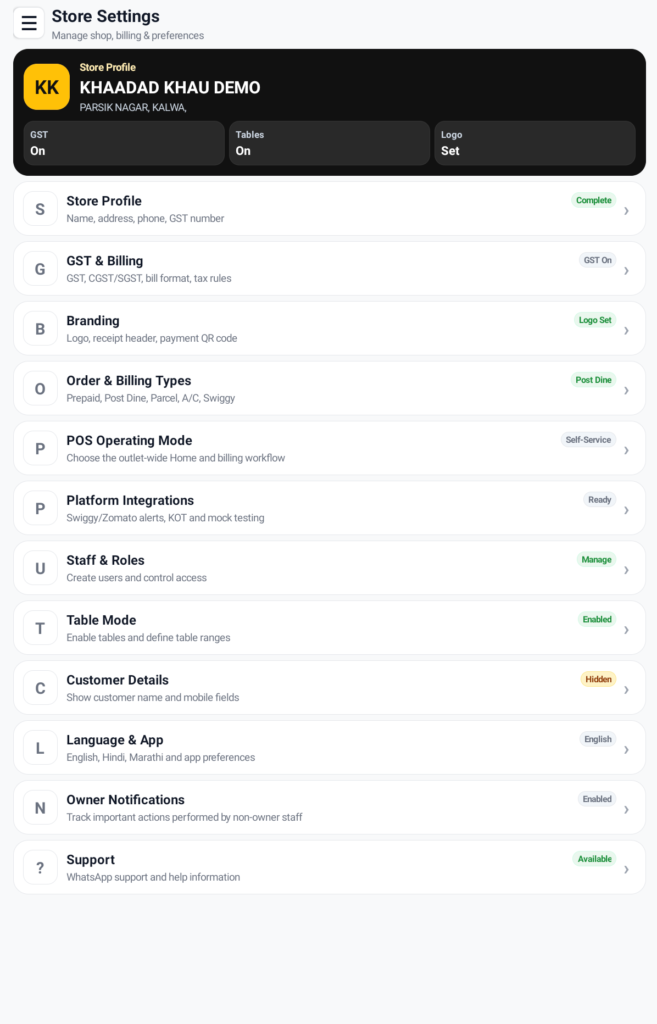
This includes better layouts, navigation, touch interactions, Dark Mode, Marathi and Hindi translations, business branding, account information, and manager access.
We also worked on performance areas such as image loading, menu rebuilding, Bluetooth printing, caching, and memory usage, including improvements for older Android tablets.
Keeping Owners in the Loop
When multiple people use a billing system, owners need visibility.
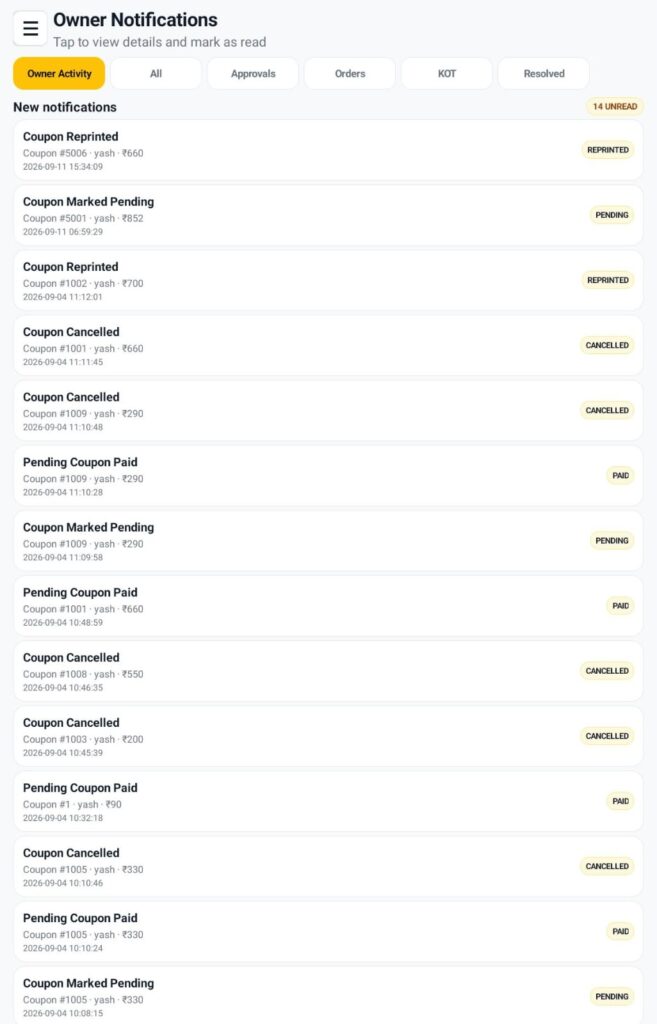
KHAADAD KHAU now includes notifications for selected activities such as:
- New pending bills
- Pending bills marked as paid
- Reprints
- Cancellations
Notifications include transaction details and order or coupon references, while owners can choose whether these alerts are enabled.
Build What Helps.
KHAADAD KHAU is being shaped around real business requirements, real usage, and the small details that make a difference during a busy day.
There is still more to build, test, and improve. But step by step, KHAADAD KHAU is moving from a billing system towards a more connected and dependable platform for food businesses.
And the journey continues — one improvement at a time.